Capsule Hotels
Capsule addresses rarely own the room they open onto. Three of the four here sit inside airport terminals, so their public side is a concourse or a lounge belonging to somebody else, and the hotel is a reception standing in it. The fourth has a restaurant with its own door to a New York pavement. In every case the sleeping part is one threshold deep.
One
Bloc Hotel Gatwick
London Gatwick Airport, United Kingdom
Anyone can walk past this front desk without holding a key, because the hotel sits inside the South Terminal building and its entrance opens onto a floor that belongs to the airport rather than to the hotel. People cross that floor on the way to check-in desks, shops and departures, and the reception simply stands among them.
Reaching the door without a booking asks for nothing more than being in the terminal, which most travellers already are. There is no separate street, no gate and no lobby set back from the crowd. Signage points to the hotel the way it points to a lounge or a food hall, so the approach feels like part of the walk.
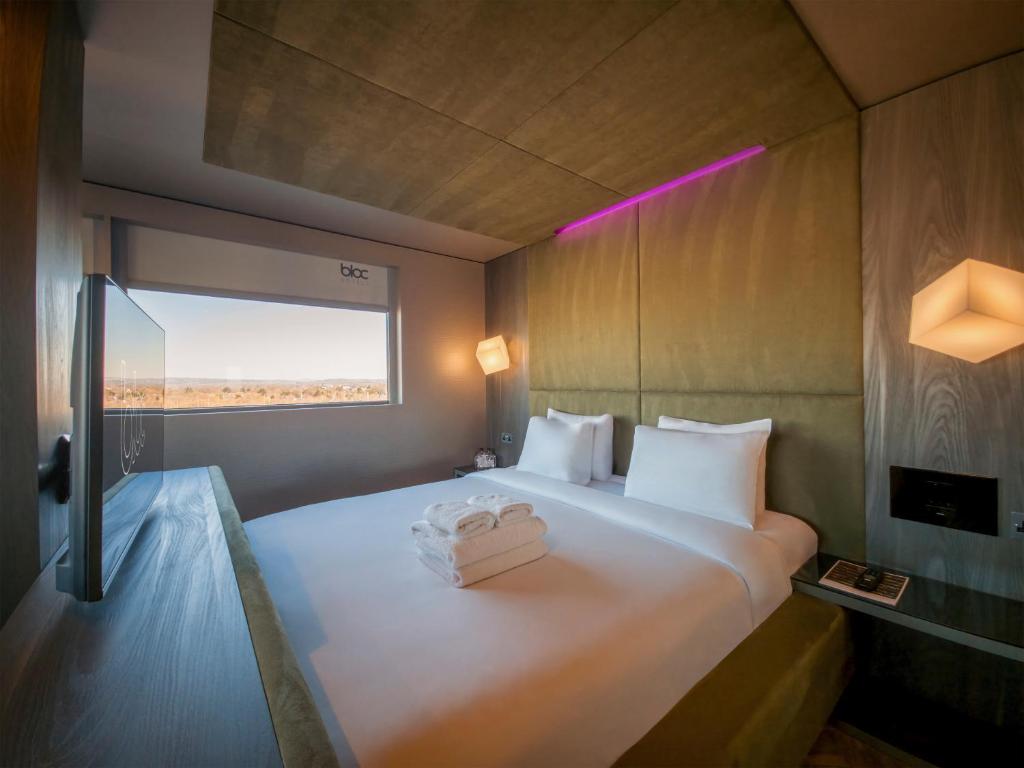
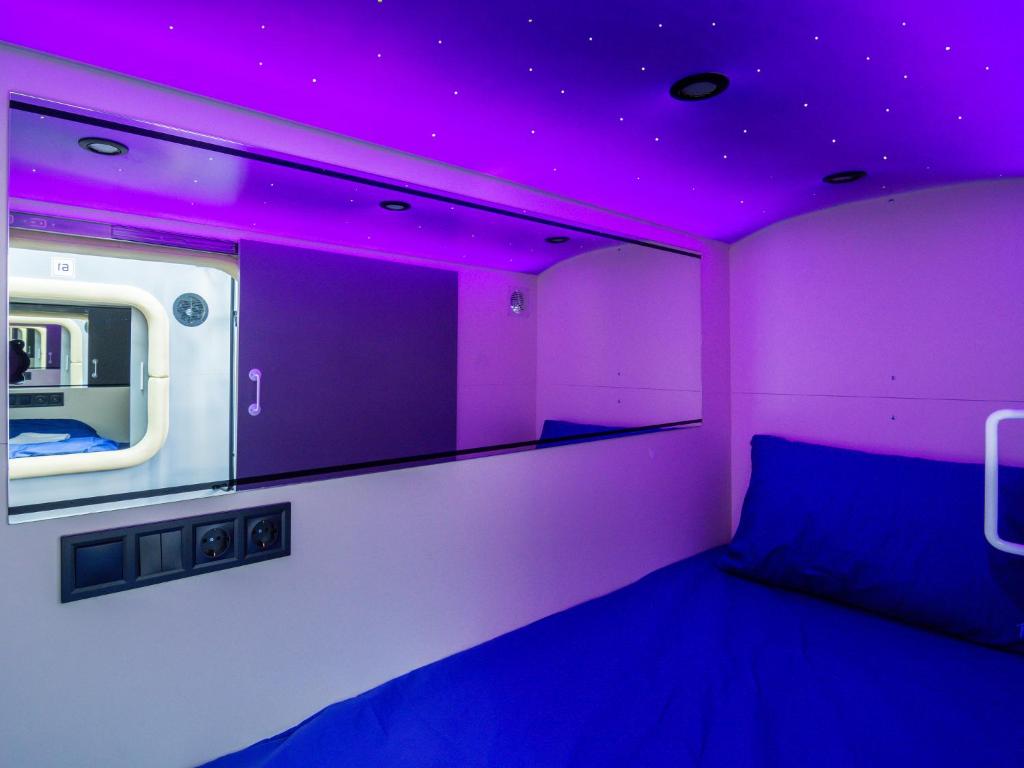
Guests keep the rooms themselves and the corridors that serve them, which sit behind a card-controlled threshold. Those spaces are compact and windowless in places, and they are the reason the hotel exists. Nothing about them is on display to the people passing on the terminal floor.
The split leaves the hotel with almost no public interior of its own. Its front is borrowed from the airport, and everything it owns outright lies behind one door. Access to any part of it can depend on how the terminal is running on a given day.
Ask ahead which terminal entrance is nearest, since the walk differs depending on where you arrive.
Written up · November 2028
Two
YOTELAIR Amsterdam Schiphol
Amsterdam Airport Schiphol, Netherlands
Everyone in the departure lounge already stands in the open part of this address, because the hotel sits airside at Schiphol, past security and passport control, in the lounge where passengers wait between flights. The operator runs other YOTEL addresses elsewhere in the city and abroad; this is the airport one, and it behaves differently.
Coming here without a cabin still means clearing security first, so the open part is open only to people already flying. A boarding pass is what carries you into the area, not the hotel, and the hotel then sits along it like any other unit in the lounge.
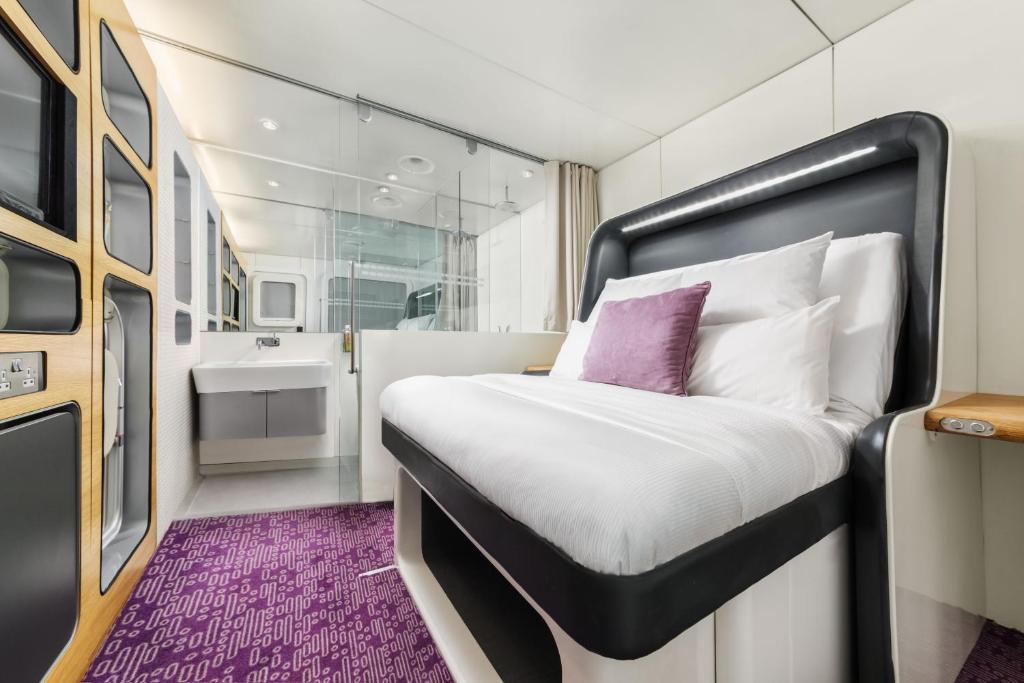
Guests hold the cabins behind the reception line, and those are small, serviced and designed for short blocks of rest. The corridor that reaches them is not a route to anywhere else, which keeps it quiet in a building that is otherwise never quiet.
Drawing the line here puts the whole public side of the address in the airport's hands. The hotel controls a reception and a corridor; the airport controls the room the reception faces. Terms of access can change with airport rules.
Confirm with the hotel how airside access works for your itinerary before counting on it.
Written up · November 2028
Three
sleep 'n fly Dubai Airport Terminal 3
Dubai, United Arab Emirates
Only passengers already flying reach the area around this lounge, because it sits inside the transit part of Terminal Three at Dubai. The operator keeps several separate addresses across different concourses of the same terminal, so the one you find depends on which gates you are using.
Walking up without a berth is possible for anyone holding a boarding pass for that concourse, and the front of the lounge reads as a reception on the concourse rather than as a hotel. Nothing about it is reached from the city; the road to it runs through security and passport control.
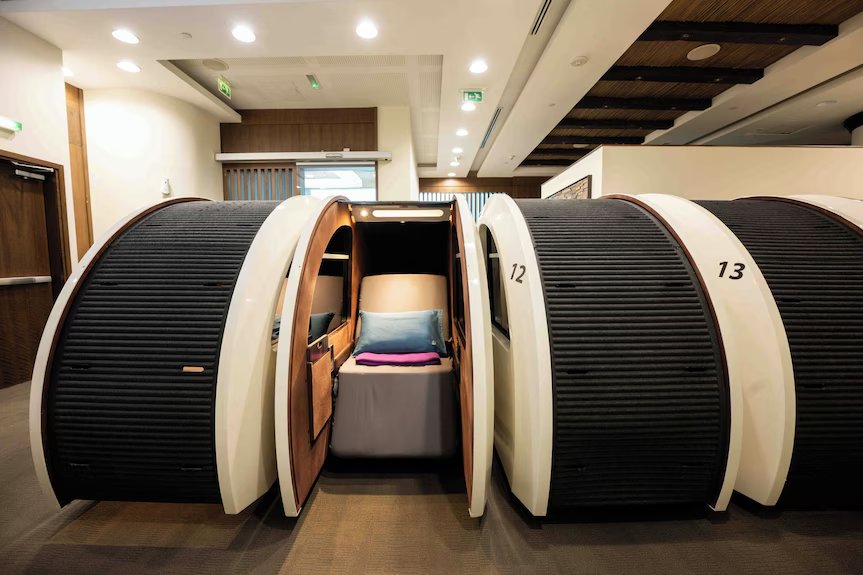
Guests take the pods and cabins that sit behind the desk, along with the washrooms and quiet corridors serving them. Those parts are shielded from concourse light and noise, which is the point of the place, and they are not visible from outside.
What the split produces is a hotel with no street of its own and no neighbourhood. Its open side is a concourse it does not own, and its closed side is a room behind a curtain of walls. Access follows the airport, not the hotel.
Check which concourse address matches your gates, because the lounges are not interchangeable.
Written up · November 2028
Four
Pod Times Square
New York, United States
A restaurant on the ground floor gives this address its open part, and it is entered from the pavement on West Forty-Second Street rather than through the hotel. The operator runs several Pod addresses in the city; this is the Times Square one, and its ground floor works as a neighbourhood room.
Arriving without a room means using that street door and never crossing the hotel's own reception. The signage on the corner reads as a restaurant sign, so passers-by often meet the food before they notice the hotel above it.
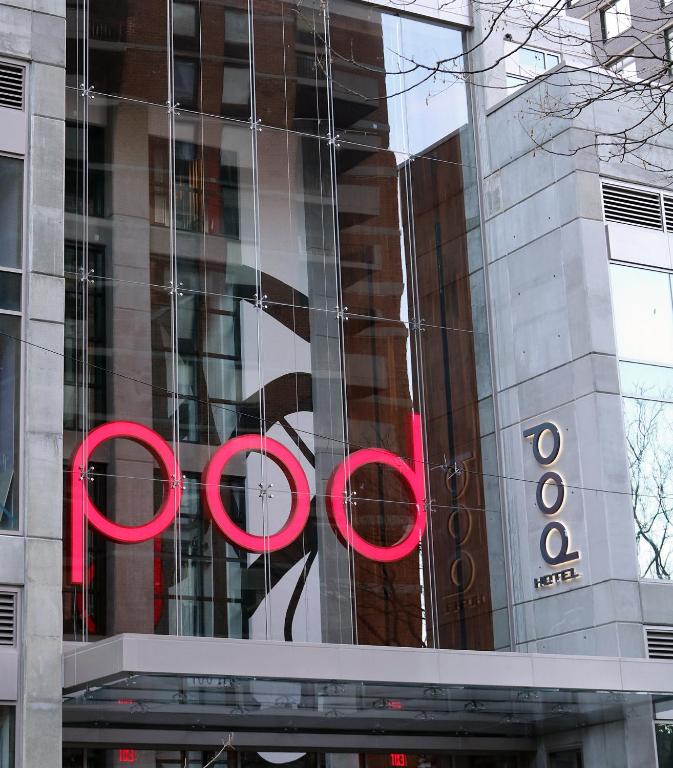
Guests keep the compact rooms upstairs and the lift lobby that reaches them, and there are further bar and terrace spaces on the building's upper levels whose access can be limited to people staying. What is available there varies.
The building stacks its two lives rather than setting them side by side: the open part sits at pavement level and the private part rises above it. The stair between them is short, and it is where the hotel begins.
Write ahead if you want to know which upper-level spaces are open to visitors during your stay.
Written up · November 2028
This site is independent and reference-only. What it says about the parts of a hotel that outsiders may enter was gathered from public sources and changes without warning; a door that was open last season may be closed on the day you arrive. Dynamic Social Agency has no tie to any hotel described here, sells nothing, books nothing, and holds no reservations. Check everything with the property itself.
Dynamic Social Agency is an independent reference published in the year two thousand and twenty-eight, written by people with no commercial tie to any hotel named on it. Read the Terms of Use, the Privacy note, or write to us through Contact.